No contractFree trial classNew beginners-only class Tuesdays 6pmSelf-defenceGroundStrikingThrows and TakedownsPart of 45+ Year TJK associationNo contractFree trial classNew beginners-only class Tuesdays 6pmSelf-defenceGroundStrikingThrows and TakedownsPart of 45+ Year TJK associationNo contractFree trial classNew beginners-only class Tuesdays 6pmSelf-defenceGroundStrikingThrows and TakedownsPart of 45+ Year TJK associationNo contractFree trial classNew beginners-only class Tuesdays 6pmSelf-defenceGroundStrikingThrows and TakedownsPart of 45+ Year TJK associationNo contractFree trial classNew beginners-only class Tuesdays 6pmSelf-defenceGroundStrikingThrows and TakedownsPart of 45+ Year TJK associationNo contractFree trial classNew beginners-only class Tuesdays 6pmSelf-defenceGroundStrikingThrows and TakedownsPart of 45+ Year TJK association
The art

Judo came
from this.
So did BJJ.

Japanese Jujutsu is the root system the modern grappling arts grew out of. Here's the actual history, and what it means for a class in a community centre in Gloucestershire.

Four hundred
years, briefly.

The short version of how a battlefield system became the thing your local gym calls BJJ.

01

Feudal Japan

Jujutsu began as a battlefield martial art used by samurai to defend themselves when disarmed. Designed to subdue armoured opponents using joint locks, throws and strikes, it was developed and refined over hundreds of years — a system built for people who could not rely on a weapon, or on being bigger.

02

Kano and Judo

In the late 19th century Jigoro Kano, a Jujutsu master, adapted the art into what we now know as Judo. By removing the most dangerous techniques and focusing on throws and groundwork, he created a system that could be practised safely at full resistance and taught widely. Judo is Jujutsu with the brakes on, and that was the point.

03

Maeda and Brazil

Judo and Jujutsu reached Brazil in the early 20th century via Mitsuyo Maeda. The Gracie family, inspired by Kano's methods, took the art back towards its practical self-defence aspects and named their style Gracie Jiu-jitsu — commonly called BJJ — focusing on taking attackers to the ground, ground control, submissions and leverage.

04

The UFC and after

Gracie schools became renowned for heavy sparring and resistance training, peaking in the 1990s with the early UFCs. Over the past thirty years BJJ has evolved again into a highly finessed sport art with a heavy focus on pure submission grappling — brilliant at what it does, and a long way from where it started.

05

Where TJK sits

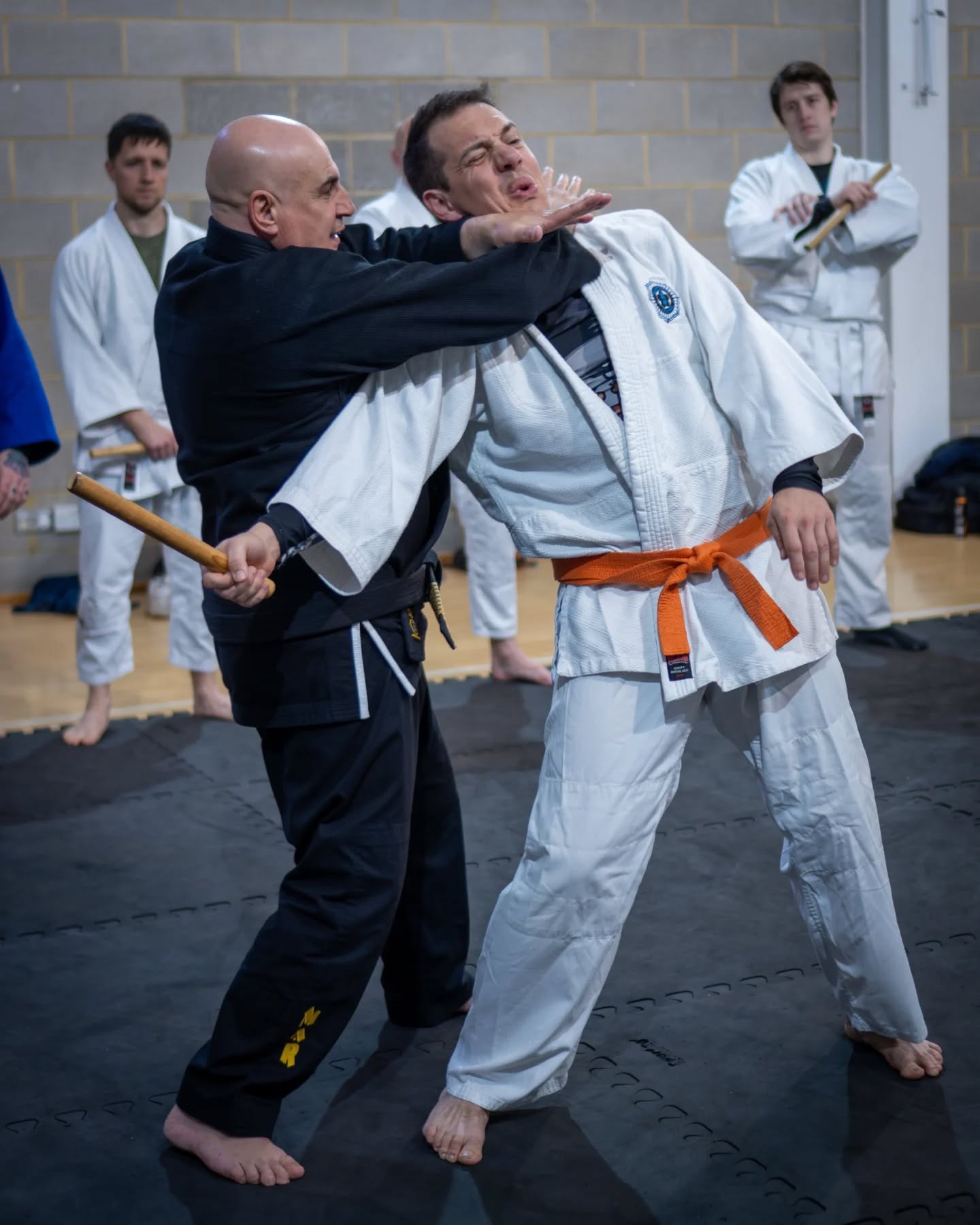
We teach the parent art, with everything the descendants specialised away from still in it. The throws Judo kept, the ground Brazil developed, the striking both dropped, and the practical self-defence the samurai actually needed — taught as one syllabus rather than four hobbies.

In one line

Battle tested,
honed through sport,
with traditional roots.

Jujutsu is the most effective and complete martial art for self-defence and real life — because it was designed for exactly that, and everything since has been a specialisation of it.

Common
questions.

Including the one about the anime, which we get more often than you'd think.

Jujutsu, jiu-jitsu or ju-jitsu?

All the same word, romanised differently. "Jujutsu" is the standard transliteration of the Japanese; "jiu-jitsu" usually signals the Brazilian branch; "ju-jitsu" is the older British spelling. We use Jujutsu.

Is this the same as Jujutsu Kaisen?

No — that's an anime about sorcerers. Understandable confusion, and no, we can't teach you to summon anything.

How is it different from BJJ?

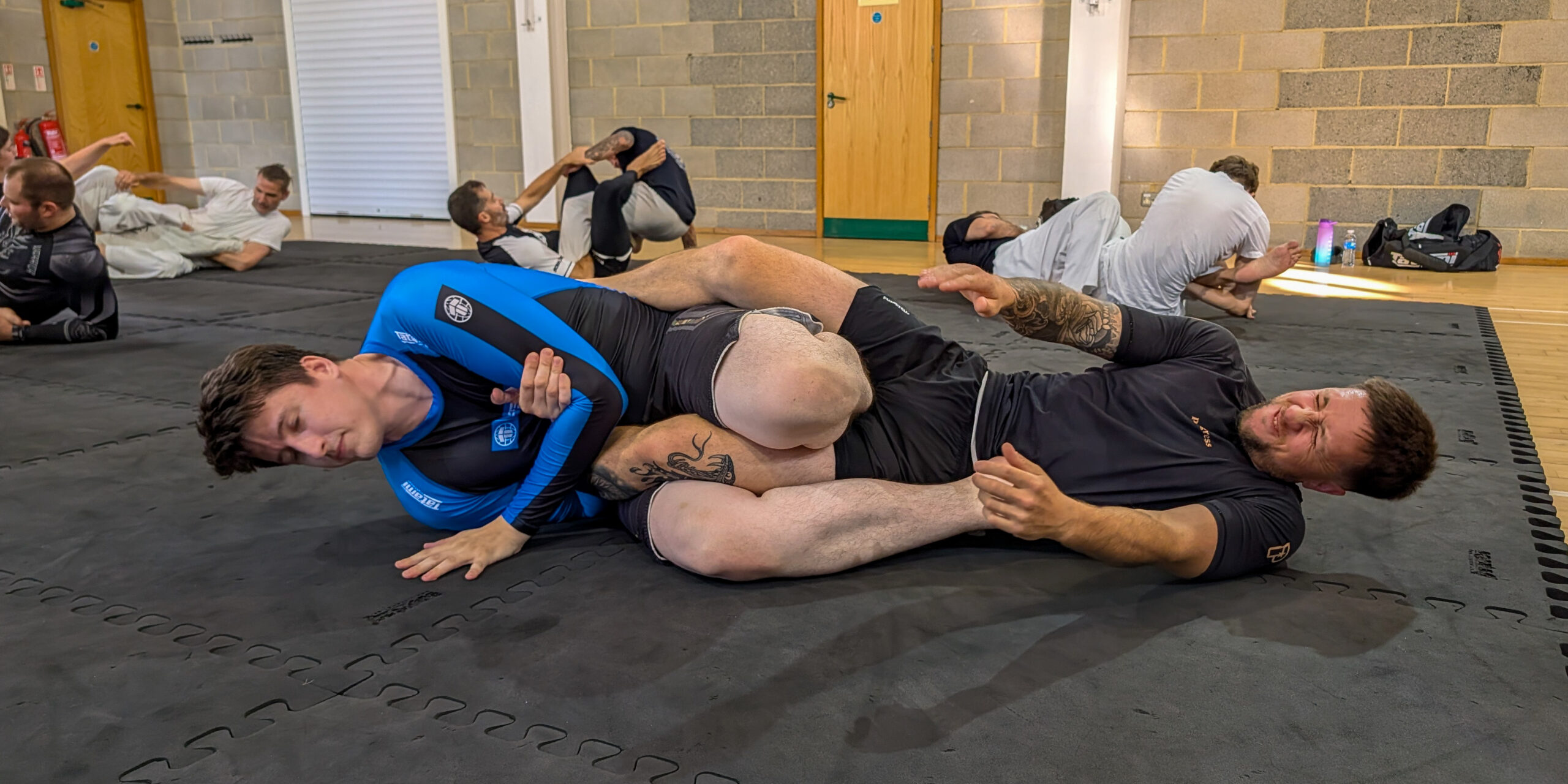
BJJ specialises in ground grappling and does it superbly. Jujutsu keeps the standing phase, the throws, the striking and the self-defence material alongside the ground work.

Is it good for self-defence?

It's what the art was built for. Our whole self-defence syllabus comes from it, and the sport side exists to pressure-test it.

Do you wear a gi?

Yes, once you've decided to stay and start grading. For your first classes, gym kit is fine.

Are there belts?

Yes — a structured grading syllabus from white belt upward, with gradings run through the association. The first grade usually takes around ten sessions of the introductory programme.

Your first
class is free.

Come and try a jujutsu class for yourself, for free!